First-Time Home Buyer Checklist: Kansas City 2026 Edition Buying your first home in 2026 is…
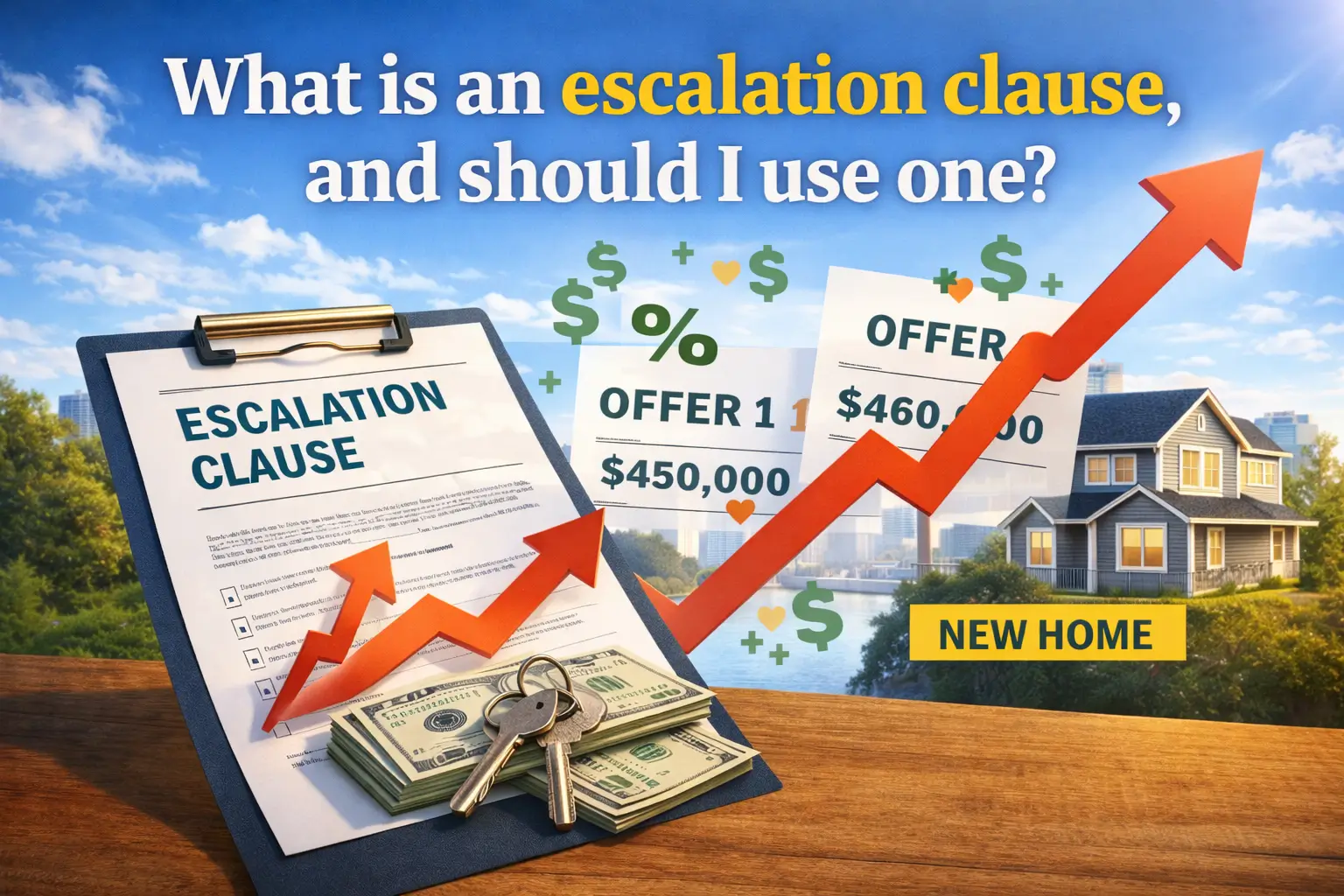
What is an escalation clause, and should I use one?
In a competitive housing market like we are seeing in 2026, many buyers are turning to strategic tools to win bidding wars without overpaying. One of the most powerful, yet often misunderstood, tools in your home-buying toolkit is the escalation clause.
What is an Escalation Clause?
An escalation clause is an addendum to your purchase offer that allows your bid to increase automatically if the seller receives a higher competing offer from another buyer. Think of it like an “auto-bid” on eBay. It typically consists of three main components:
- Original Offer Price: Your starting bid for the property.
- Escalating Factor: The set amount by which you will outbid the next highest offer (e.g., $2,000 or $5,000).
- Maximum Cap: The absolute ceiling you are willing to pay for the home.
How Does it Work? (Comparison Table)
To see why this tool is so effective in the current Kansas City housing market, look at how Buyer A’s escalation clause responds to a competing offer from Buyer B:
| Scenario Component | Buyer A (Escalation) | Buyer B (Standard) |
|---|---|---|
| Starting Offer | $400,000 | $415,000 |
| Escalation Amount | $5,000 over highest bid | N/A |
| Maximum Cap | $430,000 | N/A |
| Final Sales Price | $420,000 (Winner) | $415,000 |
In this case, Buyer A wins the home for $420,000—beating Buyer B by the set $5,000 increment—without having to jump straight to their maximum cap of $430,000. To protect you from fraud, the seller must provide proof of a bona fide (legitimate) competing offer to trigger the increase.
Should You Use One?
While an escalation clause can be a game-changer, it isn’t always the best move, especially for first-time homebuyers in Kansas City who may have tighter budget constraints.
Pros: Why You Might Use One
- Stay Competitive: It keeps you in the running for a home you love without forcing you to put your highest possible bid on the table right away.
- Saves Time: It eliminates the constant back-and-forth of multi-round bidding wars.
- Confidence: You know you won’t lose the house by a mere $1,000 just because you didn’t know someone else bid higher.
Cons: The Risks Involved
- Shows Your Hand: You are revealing your maximum budget to the seller immediately. Even if there are no other offers, a seller might counter at your maximum price because they know you can afford it.
- Appraisal Gaps: If the “escalated” price ends up higher than the home’s appraised value, you may have to pay the difference in cash. It is vital to understand what happens if a home appraises low before including this clause.
- Seller Rejection: Some sellers prefer a “clean” offer and may reject escalation clauses entirely. Many sellers often prefer conventional loan offers because they typically involve fewer inspection hurdles.
Final Recommendation
In 2026’s inventory-strained market, an escalation clause is best used when you are certain there will be multiple offers on a home you absolutely must have. However, it is essential to work with your lender to ensure your maximum cap stays within your pre-approved budget.

Related Posts