If you have recently received extra money, you might consider paying your mortgage principal. If…

How to Use Your Home’s Equity to Pay Off Debt
If you’re a homeowner overwhelmed by high-interest debt—like credit card balances or personal loans—your home’s equity could offer a solution. Leveraging this equity to pay off debt can lower interest rates, consolidate payments, and help you regain control. Two effective options for tapping into this resource are a cash-out refinance and a home equity loan. In this guide, we’ll explain how each works for debt consolidation, compare their benefits and risks, and, additionally, provide a step-by-step plan to get started.
What Is Home Equity and Why Does It Matter?
Home equity represents the portion of your home’s value you own outright—your home’s market value minus your mortgage balance. For example, if your home is worth $400,000 and you owe $250,000, you have $150,000 in equity. This value often grows as you pay down your mortgage or if property prices rise.
By borrowing against this equity, you can access funds at rates typically lower than credit cards or unsecured loans. Whether you opt for a cash-out refinance or a home equity loan, this approach can transform your finances. Learn more about what home equity means from Wikipedia.
Cash-Out Refinance vs. Home Equity Loan: How They Work
- Cash-Out Refinance
- This replaces your current mortgage with a new, larger one, giving you the difference in cash.
- For instance, refinance a $250,000 mortgage into a $300,000 loan and pocket $50,000.
- It typically offers a fixed rate with a new 15- or 30-year term. Check our mortgage refinancing page for details.
- Home Equity Loan
- Unlike a refinance, this is a second loan alongside your existing mortgage, paid as a lump sum.
- It usually has a fixed rate and a 5-15-year term.
- Meanwhile, your original mortgage remains unchanged. Check our Home Equity Loan page for details.
Both methods allow you to use home equity to pay off debt, but their differences affect your finances uniquely.
Benefits of Leveraging Home Equity for Debt Consolidation
Tapping into your home equity offers several advantages. First, secured mortgage loan interest rates sit far below average credit card rates, which frequently soar between 15% and 25%+. Second, consolidating multiple high-interest debts into one fixed bill drastically simplifies your monthly budgeting. Plus, reducing your overall interest rates can save you thousands of dollars over the lifespan of your debt payoff plan.
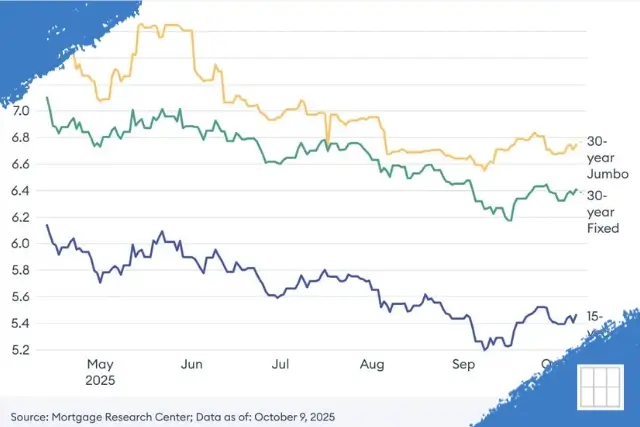
For example, a cash-out refinance might secure a better rate for your entire mortgage if your current primary loan has a high rate, while a home equity loan preserves your current low mortgage terms. See current mortgage rates.
Cash-Out Refinance vs. Home Equity Loan: Pros and Cons
Cash-Out Refinance Pros
- Offers lower interest rates than most second-mortgage home equity products.
- Consolidates all housing and personal debt into a single, straightforward monthly payment.
- Longer repayment terms (such as 30 years) significantly reduce immediate monthly cash flow constraints.
Cash-Out Refinance Cons
- However, expect higher closing costs (typically 2-5% of the total loan volume).
- Forces you to forfeit your existing mortgage rate, which can be costly if you currently hold a low historic rate.
- Extending your primary mortgage timeline resets your long-term payoff clock.
Home Equity Loan Pros
- Perfectly preserves your original low first-mortgage interest rate.
- Shorter fixed repayment terms force a much faster path to structural debt freedom.
- Additionally, it carries lower upfront closing fees than refinancing your entire primary mortgage.
Home Equity Loan Cons
- Standalone interest rates are slightly higher than a total primary mortgage refinance.
- You will be required to manage and balance two separate monthly housing payments.
- Total loan borrowing caps are often lower, as they are based strictly on a percentage of your remaining equity.
Risks to Understand Before You Begin
Before proceeding, consider the risks. For one, your home secures the loan—missed payments could lead to foreclosure. Next, borrowing reduces your equity, impacting future plans. Finally, clearing credit cards might tempt new spending. Dive deeper with refinance calculator.
Step-by-Step Guide to Using Home Equity
Here’s how to harness your equity for debt consolidation:
Step 1: Evaluate Your Debt and Equity
First, total your debts (e.g., $25,000 in credit cards). Then, estimate your equity with your homes valuation. Lenders typically cap total borrowing at 80-85% of your home’s total value, inclusive of your first mortgage.
Step 2: Check Your Credit
A score of 620+ qualifies you, but 700+ secures better rates. Therefore, review your score via your bank or free tools.
Step 3: Choose Your Option
- Cash-Out Refinance: Ideal if you want a lower rate on your whole mortgage, prefer one monthly payment, and your current mortgage rate is higher than today’s market averages.
- Home Equity Loan: Better if your current primary mortgage rate is exceptionally low and you want to leave it untouched while pulling out targeted cash.
Step 4: Shop Lenders
Next, compare local mortgage lenders. Look at rates, fees, and terms.
Step 5: Apply and Get Appraised
Submit income proof, mortgage details, and debt info. Subsequently, an appraisal confirms your home’s value (2-6 weeks).
Step 6: Pay Off Debt
Once approved, use the funds to clear high-interest debts directly—e.g., pay off $25,000 in credit cards.
Step 7: Repay Strategically
Finally, stick to your new loan’s schedule. For a refinance, consider extra payments; for a home equity loan, budget for two payments.
Tips for Success
- Borrow Wisely: Take only what you need.
- Budget Smart: For example, save interest savings in an emergency fund.
- Avoid New Debt: Cut paid-off cards if tempted.
- Get Advice: Consult an expert and schedule a call to discover if a debt consolidation loan is for you.
Which Option Fits You?
- Cash-Out Refinance: Great if you have high equity, a high baseline mortgage rate, and prefer the simplicity of one monthly payment.
- Home Equity Loan: Ideal if your current mortgage rate is low or you want a faster, isolated debt payoff window.
Final Thoughts
Harnessing your home equity to pay off debt—whether through a cash-out refinance or home equity loan—can simplify finances and cut costs. However, each option has trade-offs, so assess your needs carefully. Start by calculating your equity with our mortgage calculator, reviewing debts, and comparing lenders. With a solid, strategic plan, your home could be the direct key to unlocking long-term debt freedom!

Related Posts